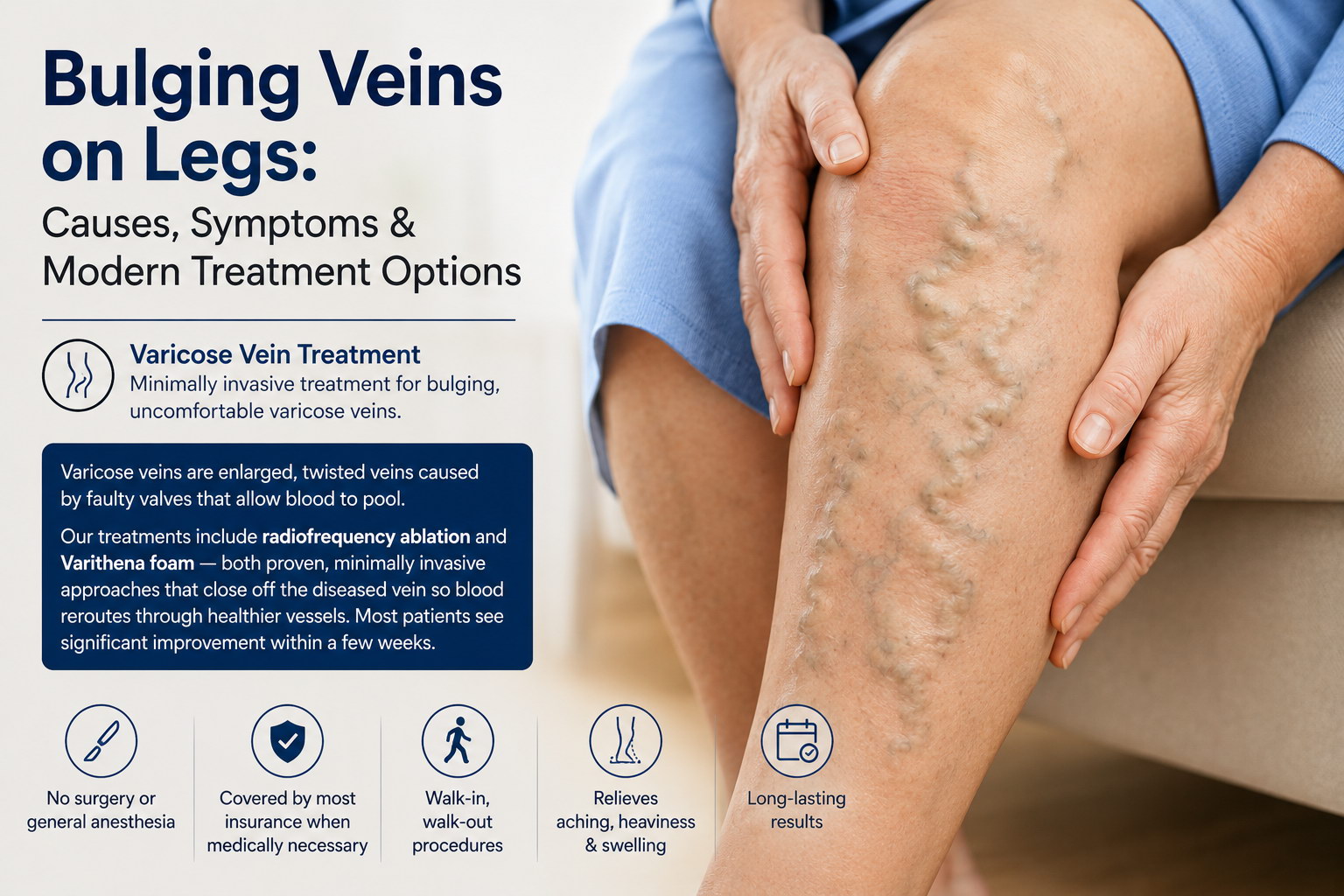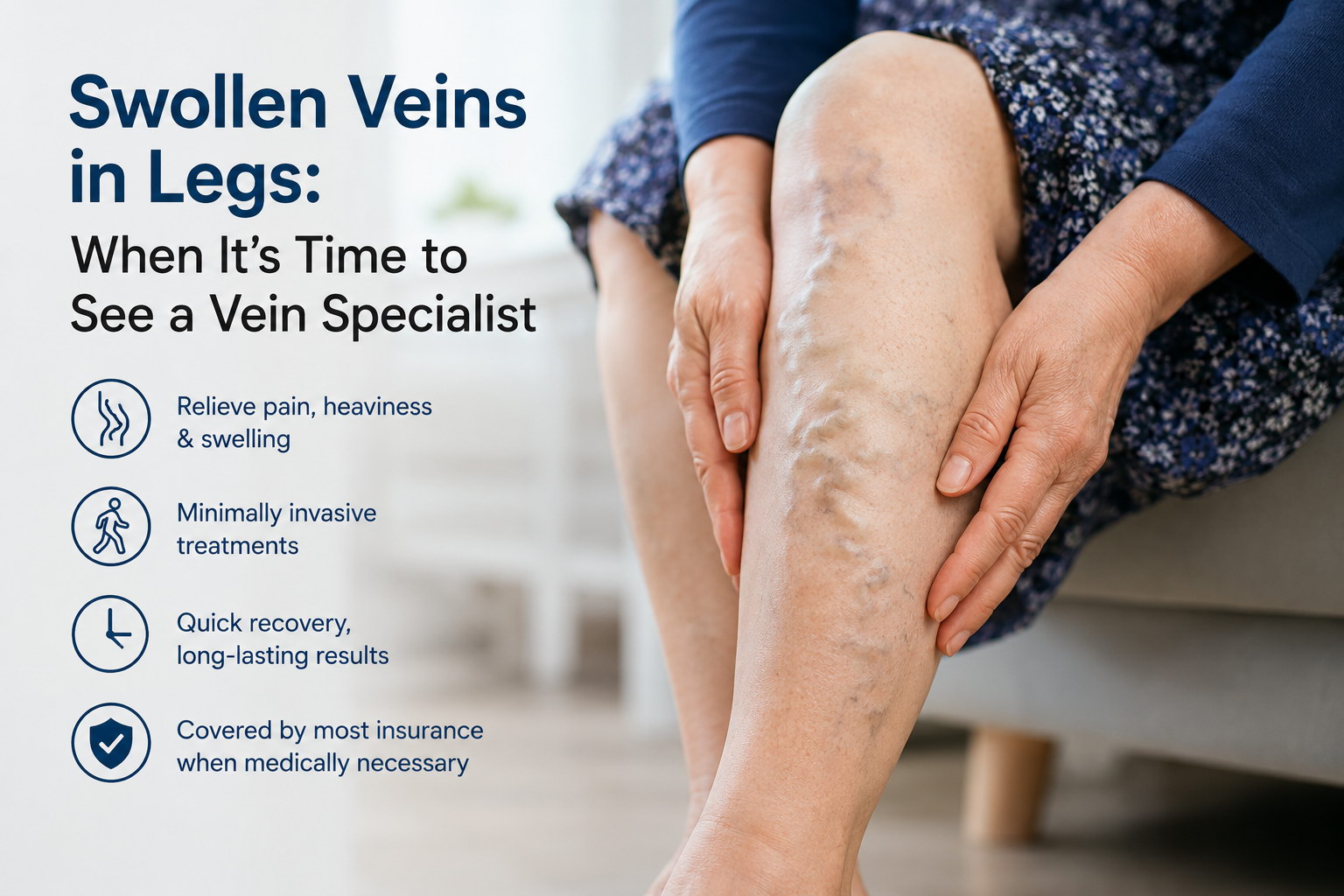

Chronic Venous Insufficiency (CVI) can cause persistent leg swelling, heaviness, pain, and visible vein changes—but surgery is no longer the first option. Today, non-surgical and minimally invasive treatments are highly effective, allowing patients to recover quickly with little to no downtime.
If you’re looking for real solutions that actually work, here’s what modern vein care offers.
Why Non-Surgical Treatments Are Now the Standard
In the past, vein stripping surgery was common. Today, most CVI cases are treated using non-surgical methods that target the root cause—faulty vein valves and blood reflux.
These treatments:
- Require little to no downtime
- Are performed in-office
- Deliver high success rates
- Improve both symptoms and appearance
Non-surgical management is now considered the standard approach for treating CVI.
1. Compression Therapy (First-Line Treatment)
Compression therapy is usually the first step in managing CVI.
How it works:
- Applies gentle pressure to the legs
- Improves blood flow back to the heart
- Reduces swelling and discomfort
Key benefits:
- Improves symptoms and daily comfort
- Supports healing of venous ulcers
- Helps prevent disease progression
Compression stockings are effective for symptom control, but they do not eliminate the underlying vein problem.
2. Sclerotherapy (Highly Effective for Smaller Veins)
Sclerotherapy is one of the most widely used non-surgical treatments.
How it works:
- A medical solution is injected into the vein
- The vein collapses and is absorbed by the body
- Blood reroutes to healthier veins
Why it works:
- Reduces visible veins
- Improves symptoms like aching and burning
- High success rate for smaller veins
This treatment is especially effective for spider veins and smaller varicose veins.
3. Endovenous Ablation (Laser or Radiofrequency)
Endovenous ablation is one of the most effective modern treatments for CVI.
Types:
- Endovenous Laser Ablation (EVLA)
- Radiofrequency Ablation (RFA)
How it works:
- A thin catheter is inserted into the vein
- Heat energy seals the damaged vein shut
- Blood flow redirects to healthy veins
Benefits:
- Targets the root cause (venous reflux)
- Minimally invasive with little discomfort
- Long-lasting results
4. Lifestyle Changes (Essential Support Treatment)
Lifestyle improvements play a major role in managing CVI.
Key habits:
- Regular walking and leg exercises
- Elevating your legs daily
- Maintaining a healthy weight
- Avoiding prolonged sitting or standing
These changes help improve circulation and reduce pressure in the veins.
5. Combination Therapy (Best Results)
In many cases, the best results come from combining treatments, such as:
- Ablation for larger faulty veins
- Sclerotherapy for smaller veins
- Compression therapy for ongoing support
A personalized, multi-treatment approach often delivers the most effective and long-lasting outcomes.
Do These Treatments Actually Work?
Yes—when properly diagnosed and treated:
- Most patients experience significant symptom relief
- Problematic veins can be closed or eliminated
- Recovery is quick, often with same-day return to normal activity
Modern non-surgical treatments are safe, effective, and widely used.
When Should You See a Specialist?
You should seek evaluation if you have:
- Persistent leg swelling
- Aching, heaviness, or fatigue
- Visible varicose or spider veins
- Skin discoloration or irritation
- Slow-healing wounds near the ankles
A simple ultrasound exam can identify the underlying issue and guide the right treatment plan.
Final Thoughts
If you’re dealing with Chronic Venous Insufficiency, you don’t need surgery to find relief. Today’s non-surgical treatments—like compression therapy, sclerotherapy, and endovenous ablation—offer effective, long-lasting results.
The key is early diagnosis and a personalized approach that treats the root cause, not just the symptoms.