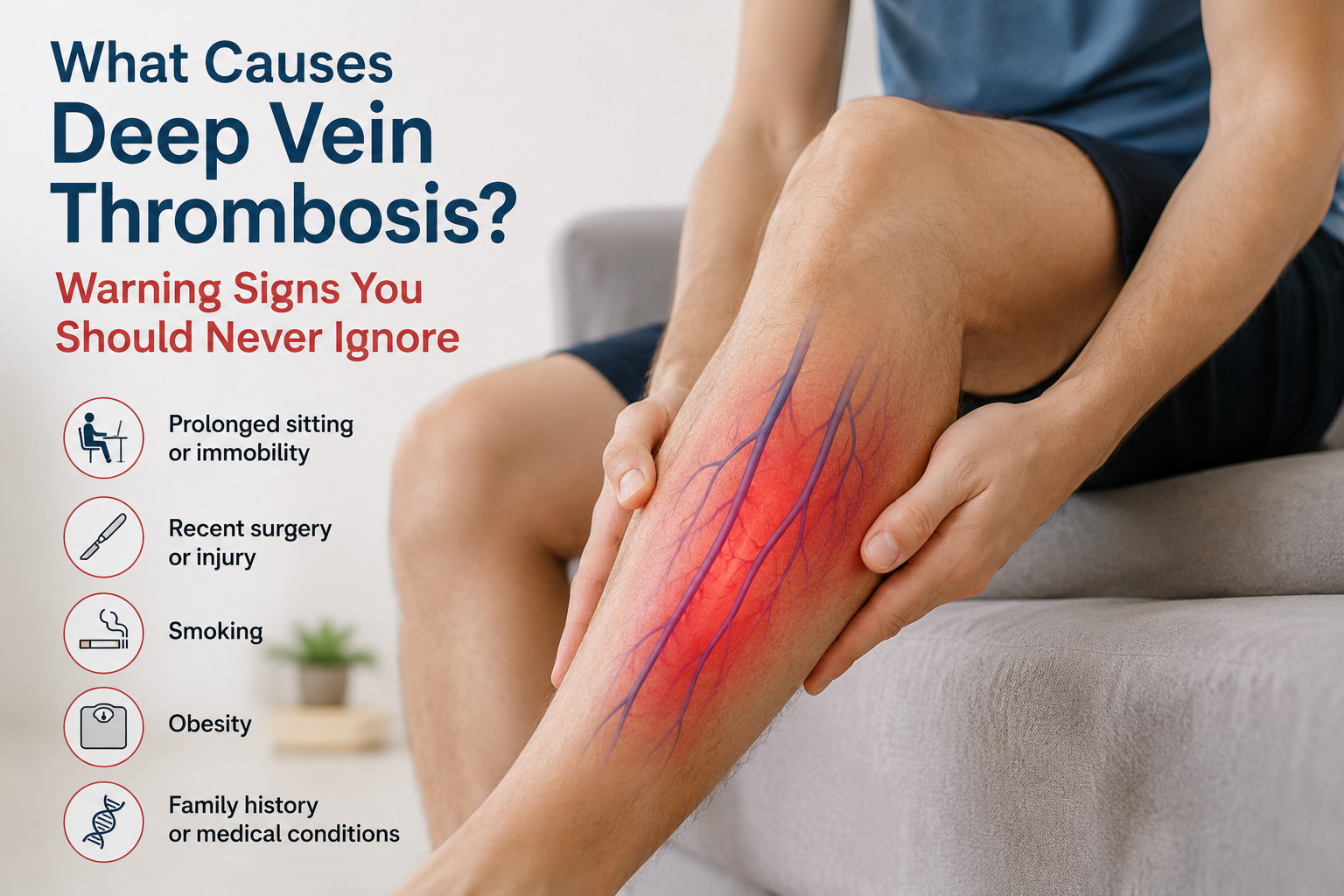

Deep Vein Thrombosis (DVT) is a serious vascular condition that occurs when a blood clot forms in a deep vein, most commonly in the leg. While some cases may begin with mild symptoms, DVT can quickly become life-threatening if the clot breaks loose and travels to the lungs, causing a pulmonary embolism (PE). That’s why same-day DVT evaluation is critical for protecting your health and preventing dangerous complications.
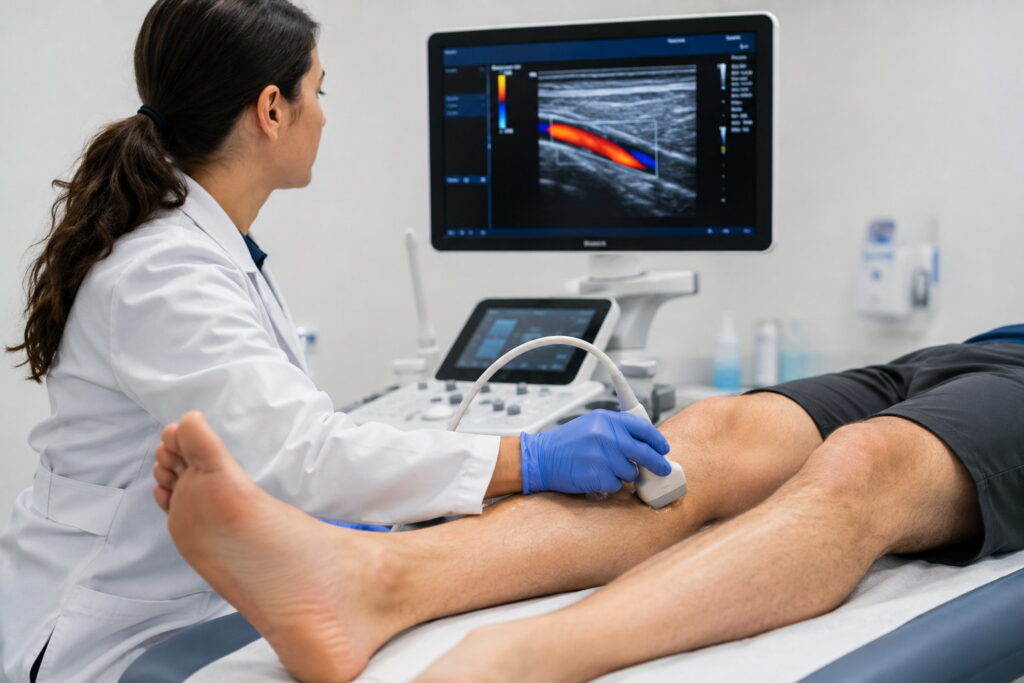
At our vein and vascular practice, we provide rapid diagnosis, duplex ultrasound imaging, anticoagulation management, and close follow-up care to help patients receive treatment as early as possible.
What Is Deep Vein Thrombosis (DVT)?
DVT develops when blood flow slows or becomes abnormal, allowing a clot to form inside a deep vein. These clots most often occur in the calf, thigh, or pelvis. If left untreated, the clot can enlarge or travel through the bloodstream.
Although DVT can affect anyone, certain factors increase your risk, including:
- Long periods of sitting or immobility
- Recent surgery or hospitalization
- Pregnancy
- Smoking
- Obesity
- Hormonal medications
- Cancer or chronic medical conditions
- Personal or family history of blood clots
Recognizing symptoms early and seeking prompt medical care can significantly reduce the risk of complications.
Common Symptoms of DVT
DVT symptoms can vary from person to person. Some people experience noticeable discomfort, while others may have little or no warning signs.
Common symptoms include:
- Leg swelling, usually on one side
- Pain or cramping in the calf
- Warmth in the affected area
- Red or discolored skin
- Tenderness when standing or walking
- Sudden unexplained leg discomfort
If you experience these symptoms, especially after travel, surgery, or prolonged inactivity, it is important to seek immediate evaluation.
Why Same-Day DVT Evaluation Matters
A blood clot can become dangerous very quickly. The greatest risk is pulmonary embolism, which occurs when part of the clot breaks off and blocks blood flow in the lungs. This medical emergency can cause chest pain, shortness of breath, dizziness, or even sudden collapse.
Same-day evaluation allows specialists to:
- Confirm whether a clot is present
- Determine the size and location of the clot
- Start treatment immediately
- Reduce the risk of clot progression
- Prevent pulmonary embolism and long-term vein damage
Early diagnosis also improves recovery outcomes and lowers the risk of post-thrombotic syndrome, a chronic condition that can cause ongoing swelling, pain, and skin changes in the leg.
How Duplex Ultrasound Diagnoses DVT
Duplex ultrasound is the gold standard for diagnosing Deep Vein Thrombosis. This non-invasive imaging test uses sound waves to evaluate blood flow and detect clots inside the veins.
During the ultrasound, a vascular specialist examines the deep veins of the leg to identify:
- Blood clot location
- Reduced or blocked blood flow
- Vein valve function
- Signs of chronic venous damage
The procedure is painless, fast, and does not involve radiation. In many cases, results are available the same day, allowing treatment to begin immediately if needed.
Treatment Options for DVT
Treatment focuses on preventing the clot from growing, stopping new clots from forming, and reducing the risk of pulmonary embolism.
Anticoagulation Therapy
Blood thinners, also known as anticoagulants, are commonly prescribed to prevent clot progression. These medications help your body naturally break down the clot over time.
Compression Therapy
Compression stockings may be recommended to improve circulation, reduce swelling, and help prevent long-term complications.
Follow-Up Monitoring
Close follow-up care is essential after a DVT diagnosis. Monitoring ensures the clot is responding to treatment and helps detect signs of post-thrombotic syndrome or recurrent clotting.
Coordinated Care
Our team works closely with your primary physician and other specialists to provide comprehensive treatment and ongoing management.
When to Seek Emergency Care
Seek immediate emergency attention if you experience:
- Sudden shortness of breath
- Chest pain
- Rapid heartbeat
- Coughing up blood
- Severe dizziness or fainting
These symptoms may indicate a pulmonary embolism and require urgent medical care.
Protect Your Health With Early DVT Detection
Deep Vein Thrombosis should never be ignored. Prompt diagnosis and treatment can prevent serious complications and protect your long-term vascular health. If you notice swelling, pain, or other symptoms of DVT, same-day evaluation can make a critical difference.
Our practice offers rapid duplex ultrasound diagnosis, expert anticoagulation management, and personalized follow-up care to help patients recover safely and confidently.