
Deep Vein Thrombosis (DVT) is a serious condition that occurs when a blood clot forms in a deep vein, most commonly in the leg. While some cases develop gradually, others can become dangerous without warning. If the clot breaks loose and travels to the lungs, it can cause a life-threatening pulmonary embolism (PE).
Understanding what causes DVT and recognizing the warning signs early can help prevent severe complications and protect your vascular health.
What Is Deep Vein Thrombosis (DVT)?
DVT happens when blood flow slows down or becomes blocked, allowing a clot to form inside a deep vein. These clots most often occur in the calf, thigh, or pelvis, but they can develop in other areas of the body as well.
Some blood clots remain stable and resolve with treatment, while others may grow larger or travel through the bloodstream. Prompt diagnosis and treatment are essential to reduce these risks.
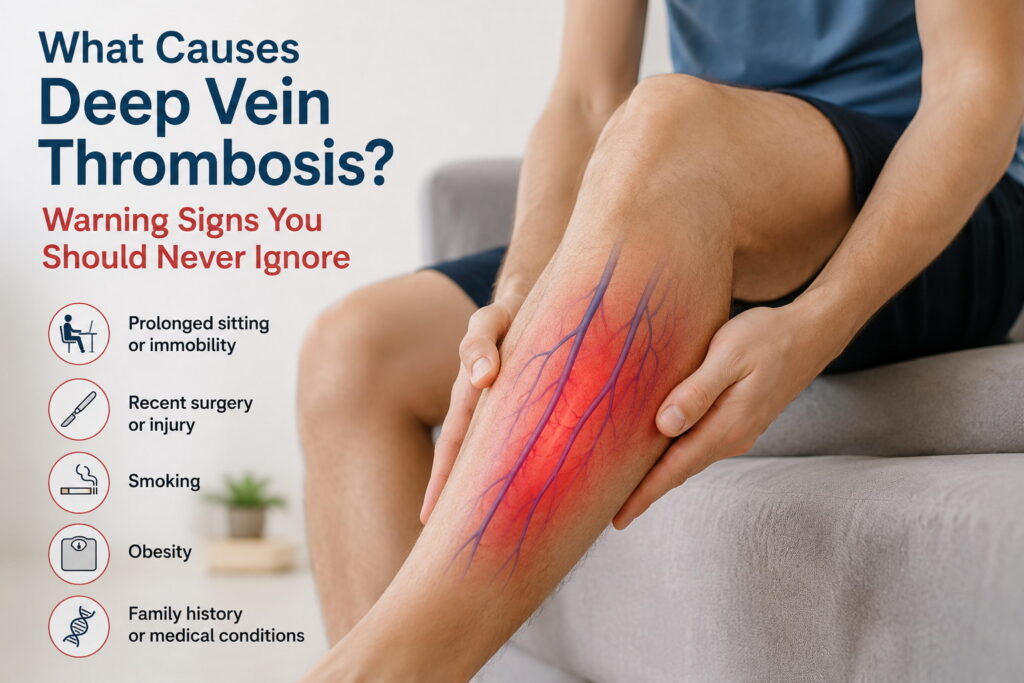
Common Causes of Deep Vein Thrombosis
Several medical conditions, lifestyle factors, and situations can increase the likelihood of developing DVT.
Prolonged Sitting or Immobility
Long periods of inactivity reduce healthy blood circulation in the legs. This commonly occurs during:
- Long flights or car rides
- Extended bed rest
- Recovery after surgery
- Hospitalization
When blood pools in the veins, clots are more likely to form.
Recent Surgery or Injury
Surgical procedures, especially orthopedic surgeries involving the hips or knees, can increase clotting risk. Injuries to the veins or surrounding tissues may also trigger blood clot formation.
Pregnancy and Hormonal Changes
Pregnancy increases pressure on the veins and naturally raises clotting factors in the blood. Hormonal medications such as birth control pills or hormone replacement therapy may also contribute to DVT risk.
Smoking
Smoking damages blood vessels and affects circulation, increasing the chance of abnormal clotting.
Obesity
Excess body weight places additional pressure on the veins and may reduce circulation in the lower extremities.
Medical Conditions
Certain conditions can increase the risk of blood clots, including:
- Cancer
- Heart disease
- Inflammatory disorders
- Blood clotting disorders
- Previous history of DVT or pulmonary embolism
Family history may also play a role in clotting risk.
Warning Signs of DVT You Should Never Ignore
DVT symptoms can vary depending on the size and location of the clot. Some people may have no symptoms at all, while others develop noticeable leg discomfort.
Common warning signs include:
- Swelling in one leg
- Pain or cramping in the calf
- Warmth in the affected area
- Redness or skin discoloration
- Tenderness when standing or walking
- Tightness or heaviness in the leg
Symptoms often affect only one leg, although DVT can occasionally occur in both legs.
Signs of a Pulmonary Embolism (Medical Emergency)
If a blood clot travels to the lungs, it can block blood flow and become life-threatening. Seek emergency medical attention immediately if you experience:
- Sudden shortness of breath
- Chest pain
- Rapid heartbeat
- Dizziness or fainting
- Coughing up blood
Pulmonary embolism requires urgent treatment and should never be ignored.
How DVT Is Diagnosed
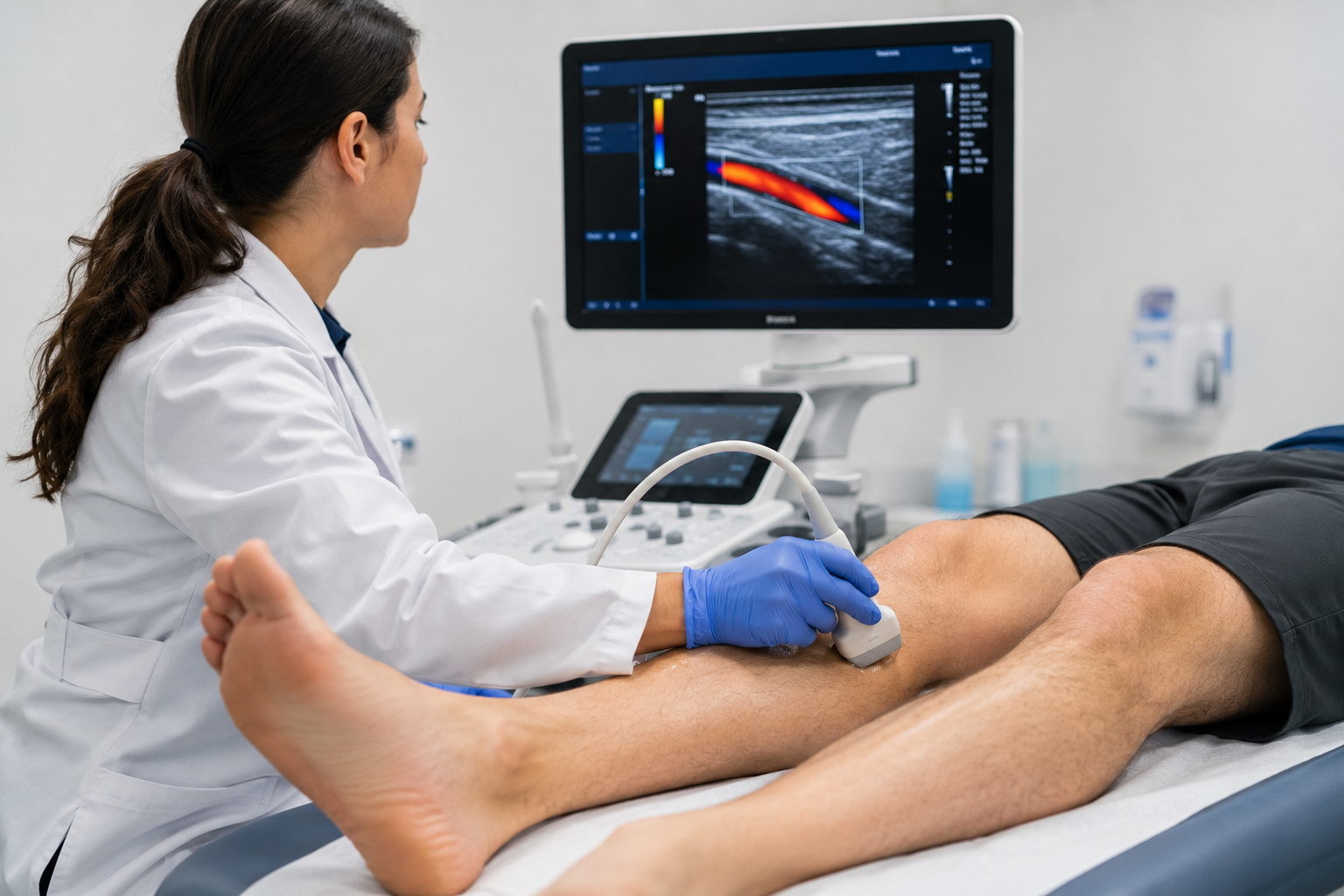
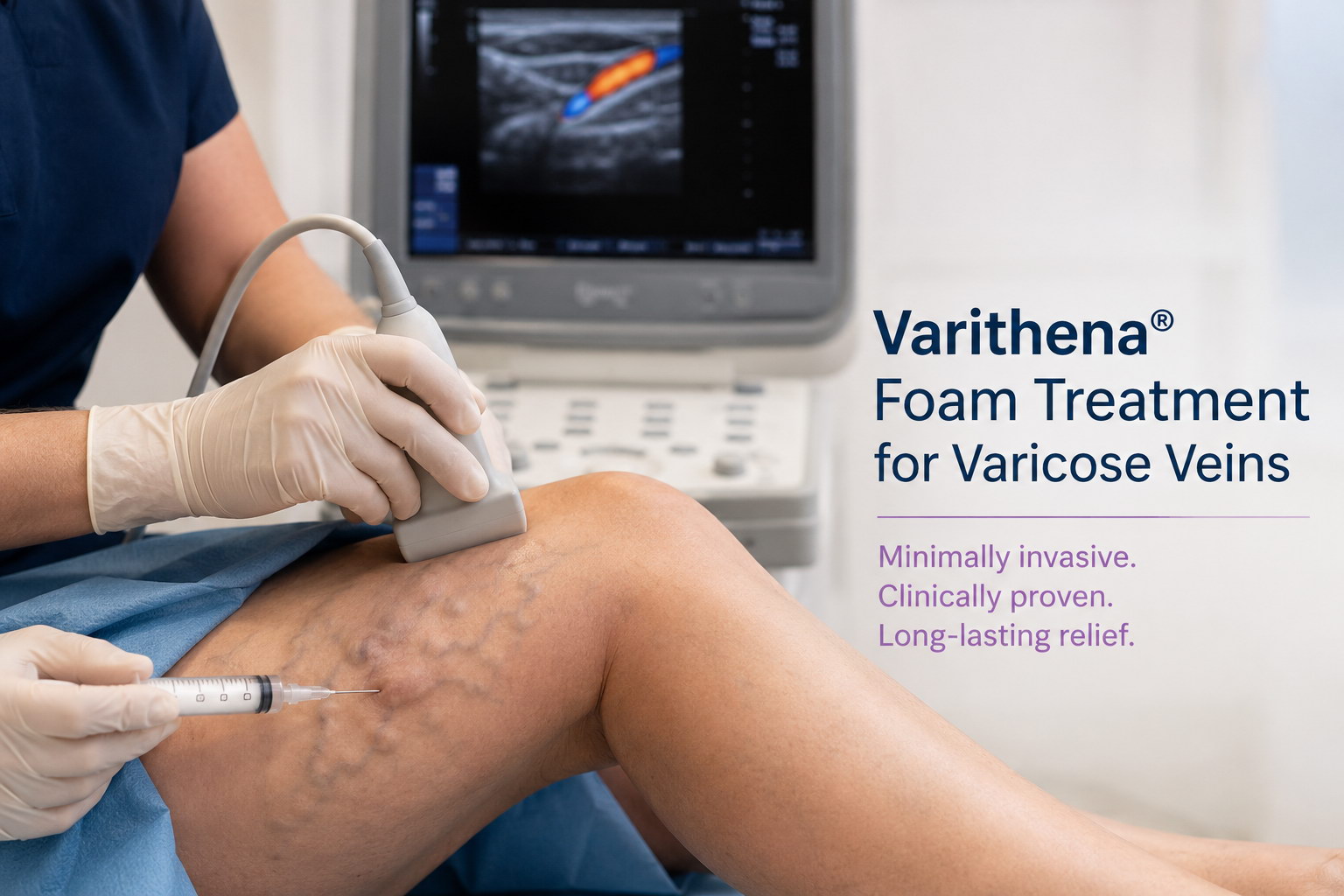
Early diagnosis is critical for preventing complications. Duplex ultrasound is the most common and effective imaging test used to detect Deep Vein Thrombosis.
This painless, non-invasive procedure allows vascular specialists to:
- Visualize blood flow
- Identify blood clots
- Evaluate vein function
- Determine clot size and location
In many cases, same-day evaluation and ultrasound testing are available for patients with concerning symptoms.
Treatment Options for DVT
Treatment focuses on stopping the clot from growing, preventing new clots, and reducing the risk of pulmonary embolism.
Anticoagulation Therapy
Blood thinners are commonly prescribed to prevent further clotting while the body gradually dissolves the clot.
Compression Therapy
Compression stockings may help reduce swelling, improve circulation, and lower the risk of long-term vein complications.
Ongoing Monitoring
Follow-up care is important to monitor recovery and identify possible complications such as post-thrombotic syndrome.
Don’t Ignore the Signs of DVT
Deep Vein Thrombosis can become dangerous quickly, especially if left untreated. Recognizing the warning signs and seeking prompt medical care can help prevent life-threatening complications and protect your long-term health.
If you are experiencing leg swelling, pain, or other symptoms of DVT, early evaluation with duplex ultrasound and expert vascular care can make all the difference.