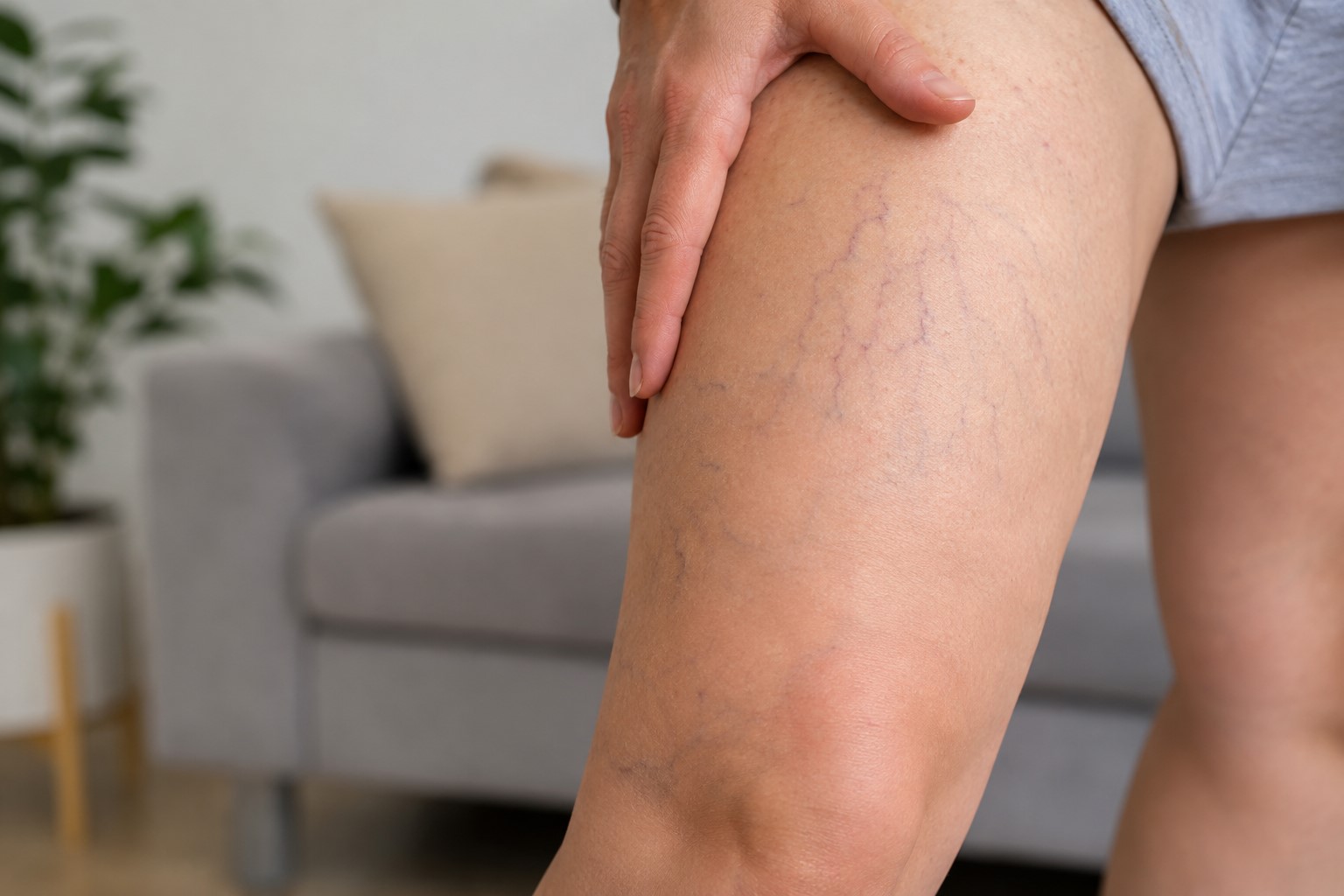

Many people notice blue, purple, or red veins appearing on their legs and assume they’re simply a cosmetic concern. While visible veins are often harmless, they can sometimes indicate an underlying vein condition that requires medical attention.
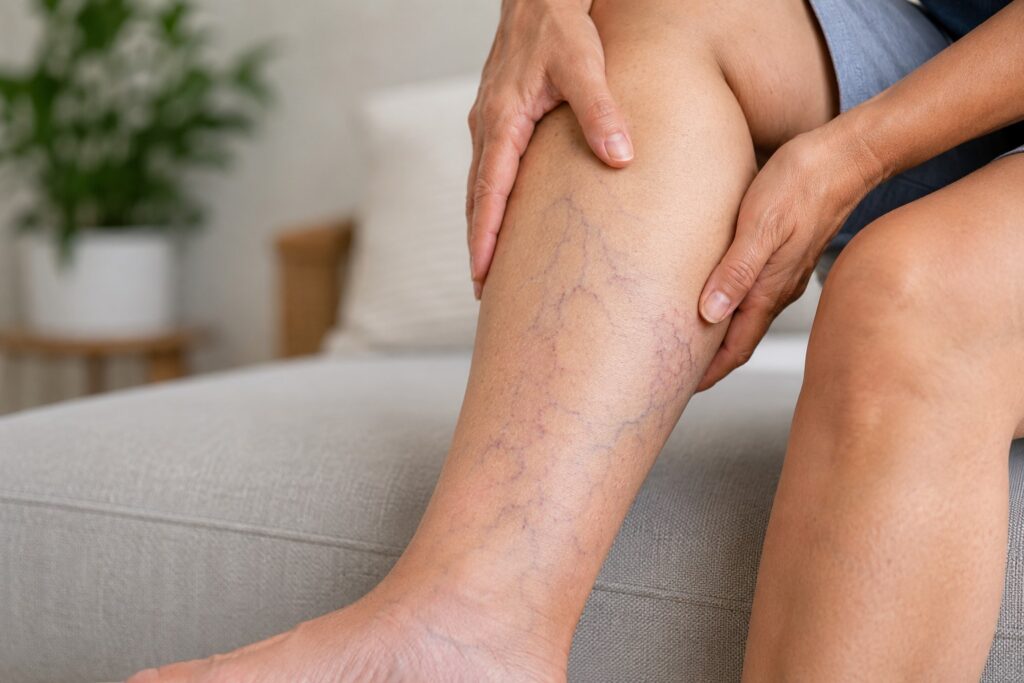
Spider veins and varicose veins affect millions of adults and can become more noticeable over time. In some cases, they are accompanied by symptoms that may signal poor circulation or chronic venous insufficiency.
Knowing when visible veins are more than a cosmetic issue can help you seek treatment before symptoms worsen.
Why Are Veins Becoming More Visible?
Visible veins can develop for several reasons, including:
- Aging and thinning skin
- Genetics and family history
- Pregnancy
- Hormonal changes
- Prolonged sitting or standing
- Excess weight
- Poor vein valve function
When vein valves weaken, blood can pool in the legs instead of flowing efficiently back to the heart. This increased pressure can cause veins to enlarge and become more visible beneath the skin.
When Visible Veins May Be a Warning Sign
While some visible veins are harmless, certain symptoms may indicate an underlying vein disorder.
Leg Heaviness or Fatigue
Do your legs feel heavy, tired, or achy by the end of the day?
This is one of the most common signs of vein disease. Poor circulation can cause blood to collect in the legs, leading to discomfort and fatigue.
Swelling in the Legs or Ankles
Persistent swelling is often associated with chronic venous insufficiency. If swelling worsens after standing or sitting for long periods, it’s worth discussing with a vein specialist.
Aching, Throbbing, or Cramping
Visible veins accompanied by aching, throbbing, or nighttime leg cramps may indicate increased pressure within the veins.
Itching or Burning Sensations
Some patients experience itching, burning, or irritation around visible veins. These symptoms can occur when damaged veins affect nearby tissues.
Bulging Varicose Veins
Unlike spider veins, varicose veins are larger, twisted, and raised above the skin’s surface. These veins are often associated with underlying circulation problems and should be evaluated.
Skin Discoloration Around the Ankles
Darkening, redness, or brown discoloration near the ankles can be a sign of chronic venous insufficiency and should not be ignored.
Slow-Healing Wounds
In advanced cases of vein disease, poor circulation may lead to wounds or ulcers that heal slowly, particularly around the lower legs and ankles.
What Conditions Can Cause Visible Veins?
Spider Veins
Spider veins are small red, blue, or purple veins that appear close to the skin’s surface. They are often considered cosmetic but may occasionally cause discomfort.
Varicose Veins
Varicose veins are enlarged veins caused by damaged vein valves. They frequently cause symptoms such as pain, swelling, heaviness, and leg fatigue.
Chronic Venous Insufficiency (CVI)
CVI occurs when veins struggle to return blood efficiently to the heart. It is one of the most common causes of leg swelling, discomfort, and visible veins.
What Happens During a Vein Evaluation?
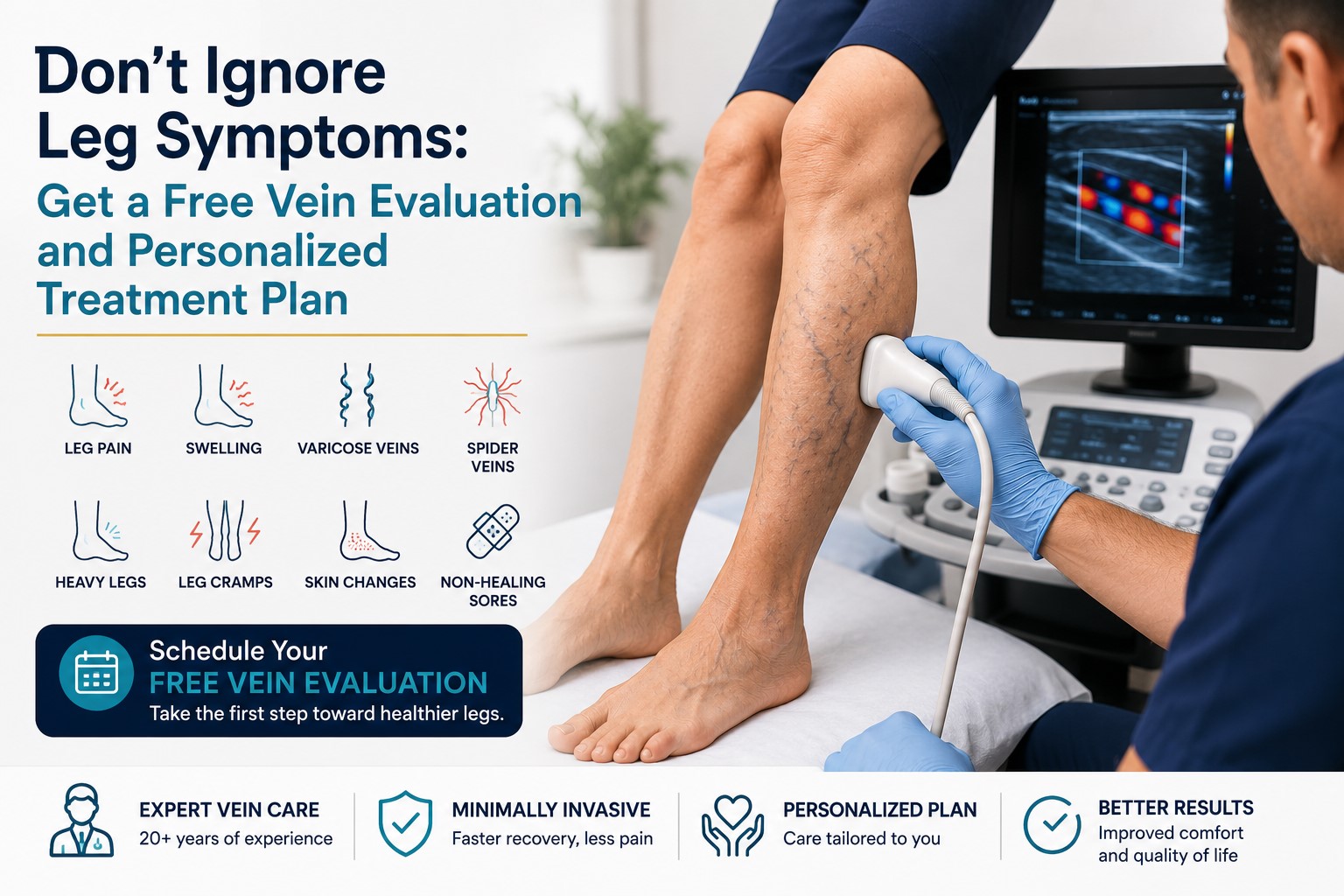
A vein evaluation is simple, painless, and designed to identify the root cause of your symptoms.
Your specialist may perform:
- A review of your symptoms and medical history
- A physical examination
- Duplex ultrasound imaging
- Circulation assessment
- Personalized treatment recommendations
Ultrasound imaging allows your provider to evaluate blood flow and determine whether underlying vein disease is present.
Treatment Options for Visible Veins
Modern vein treatments are minimally invasive and performed in an outpatient setting.
Sclerotherapy
An effective treatment for spider veins that uses a specialized solution to close and fade unwanted veins.
Radiofrequency Ablation (RFA)
A minimally invasive procedure that uses heat energy to close diseased veins and improve circulation.
Compression Therapy
Medical-grade compression stockings can help reduce swelling and improve blood flow.
Lifestyle Changes
Regular exercise, weight management, leg elevation, and avoiding prolonged sitting or standing can support healthy circulation.
Don’t Wait Until Symptoms Get Worse
Visible veins may seem like a cosmetic issue, but they can sometimes be an early warning sign of vein disease. If you’re experiencing leg pain, swelling, heaviness, cramping, or worsening visible veins, a professional evaluation can help determine the cause.
Early diagnosis and treatment can relieve symptoms, improve circulation, and prevent complications before they progress.
If you’ve noticed visible veins on your legs, schedule a comprehensive vein evaluation to learn whether treatment may be right for you.