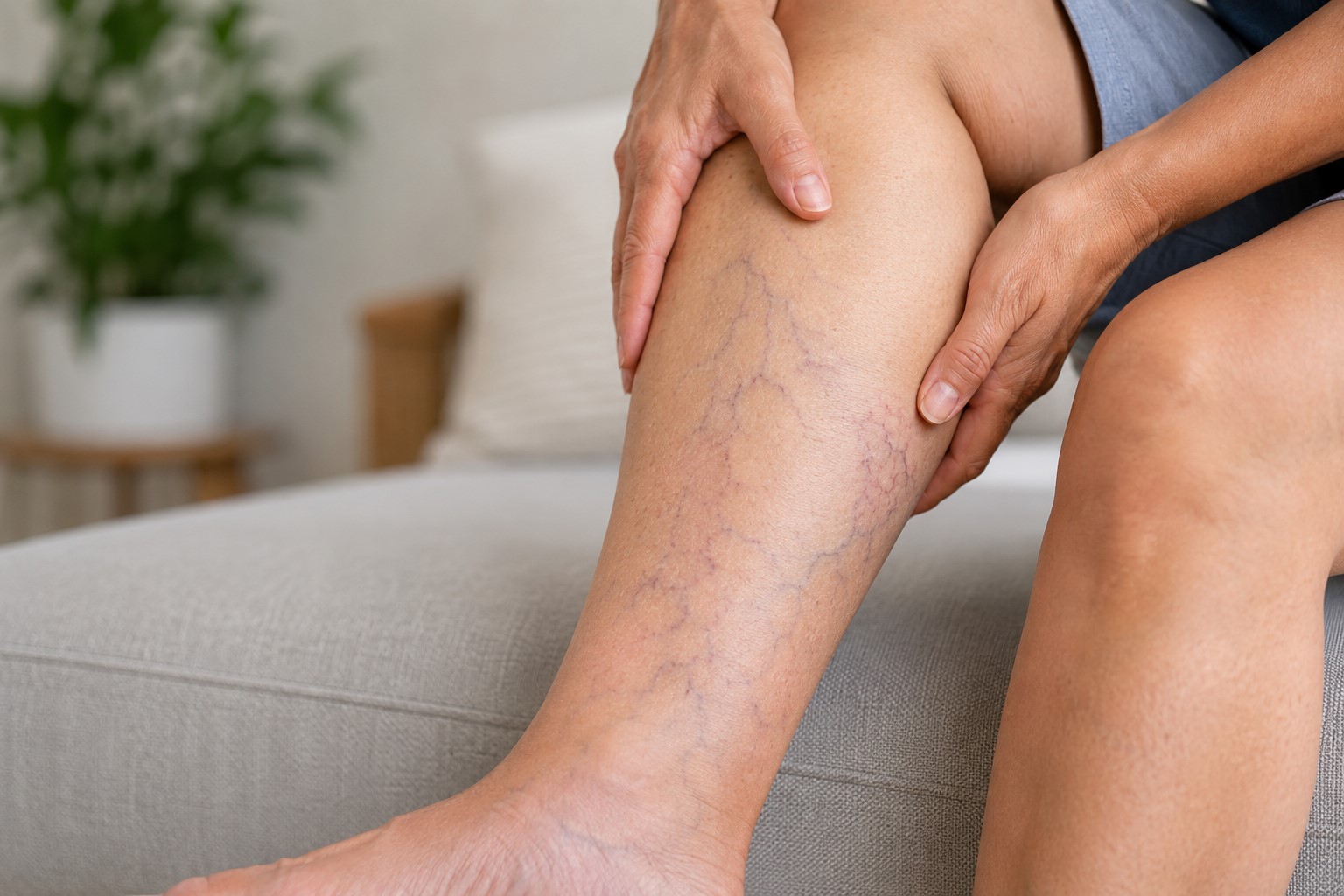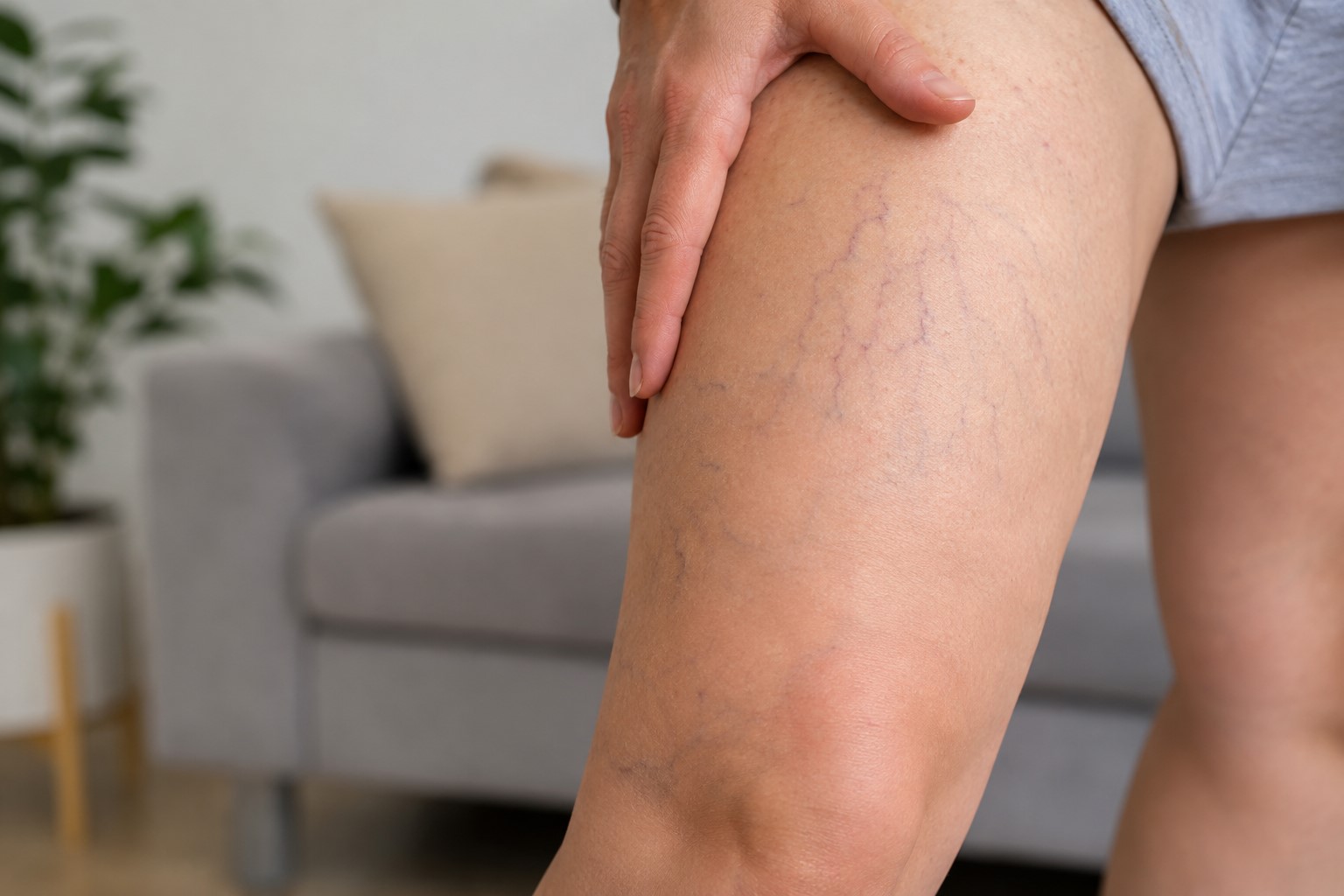

Have you noticed small red, blue, or purple veins appearing on your legs, ankles, or thighs? These tiny visible veins, often called spider veins, are a common concern for both women and men. While many people consider them a cosmetic issue, spider veins can sometimes be associated with symptoms such as aching, burning, itching, or leg fatigue.
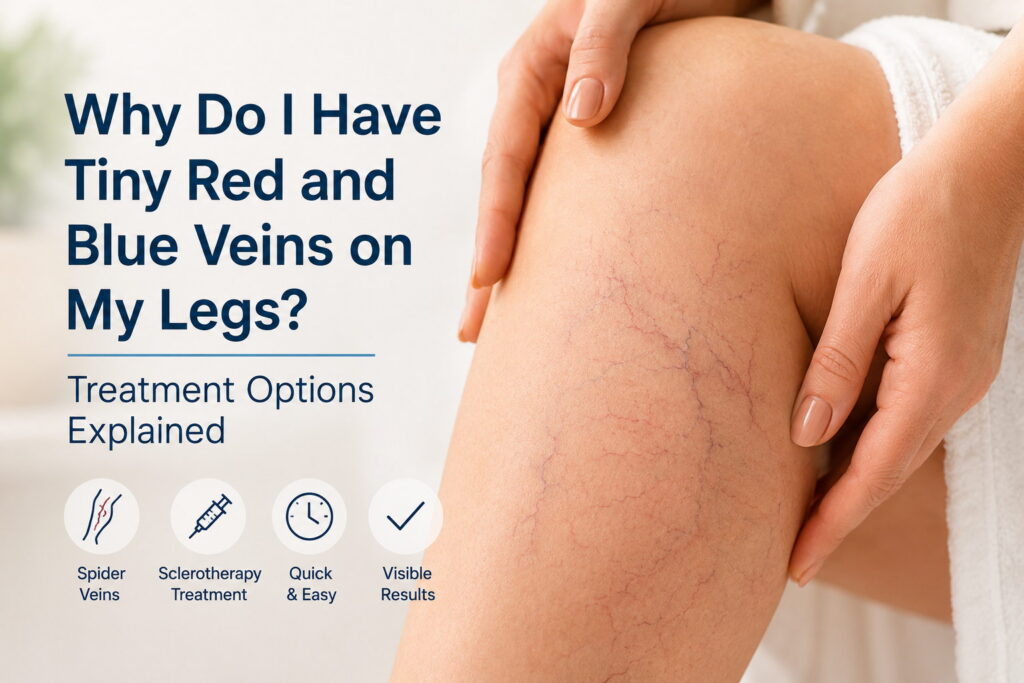
Understanding what causes spider veins and the treatment options available can help you achieve healthier-looking legs and improve your confidence.
What Are Spider Veins?
Spider veins are small, dilated blood vessels that appear just beneath the surface of the skin. They often resemble spider webs, tree branches, or thin lines and may be red, blue, or purple in color.
Spider veins most commonly develop on the:
- Legs
- Thighs
- Calves
- Ankles
- Face
Although they are generally harmless, they can become more noticeable over time if left untreated.
What Causes Spider Veins?
Several factors can contribute to the development of spider veins, including:
Genetics
Family history is one of the strongest risk factors. If your parents or close relatives have spider veins, you may be more likely to develop them.
Aging
As we age, vein walls and valves can weaken, making visible veins more likely to appear.
Hormonal Changes
Pregnancy, menopause, and hormonal medications can increase the risk of spider vein formation.
Standing or Sitting for Long Periods
Jobs that require prolonged standing or sitting can place additional pressure on the veins in the legs.
Sun Exposure
Excessive sun exposure may contribute to spider veins, particularly on the face.
Weight Gain
Carrying extra weight can increase pressure on leg veins and contribute to vein problems.
Are Spider Veins the Same as Varicose Veins?
Not exactly.
Spider veins are smaller and closer to the skin’s surface, while varicose veins are larger, twisted veins that may bulge above the skin.
In some cases, spider veins can be a sign of underlying venous insufficiency or circulation problems. A vein specialist can determine whether additional evaluation is needed.
When Should You Seek Treatment?
You may want to consider treatment if your spider veins:
- Cause discomfort or aching
- Make your legs feel heavy or tired
- Continue to spread or worsen
- Affect your confidence or appearance
- Are accompanied by swelling or other vein-related symptoms
An evaluation can help determine the most effective treatment plan for your specific condition.
The Most Effective Spider Vein Treatment: Sclerotherapy
One of the most trusted and effective treatments for spider veins is sclerotherapy.
During the procedure, a specialized solution is injected directly into the affected vein using tiny microinjections. The solution causes the vein walls to collapse and seal shut. Over time, the treated vein is naturally absorbed by the body and gradually fades from view.
Benefits of Sclerotherapy
- Quick 20–30 minute office procedure
- Virtually painless treatment
- No surgery required
- No downtime
- Minimal disruption to daily activities
- Effective for legs, ankles, and selected facial veins
- Excellent cosmetic results
Most patients return to work and normal activities immediately after treatment.
How Long Does It Take to See Results?
Results develop gradually as the body absorbs the treated veins.
Many patients begin noticing improvement within a few weeks, with continued fading over approximately 4–6 weeks. Depending on the number and size of veins being treated, multiple sessions may be recommended for optimal results.
Can Spider Veins Be Prevented?
While genetics cannot be changed, you can help reduce your risk by:
- Staying physically active
- Maintaining a healthy weight
- Avoiding prolonged sitting or standing
- Elevating your legs when possible
- Wearing compression stockings when recommended
- Protecting your skin from excessive sun exposure
Schedule a Spider Vein Consultation
If you’re bothered by visible red, blue, or purple veins on your legs, effective treatment is available. Modern sclerotherapy can safely and effectively reduce the appearance of spider veins with little to no downtime.
A consultation with a vein specialist can help determine the cause of your visible veins and create a personalized treatment plan to restore clearer, healthier-looking skin.