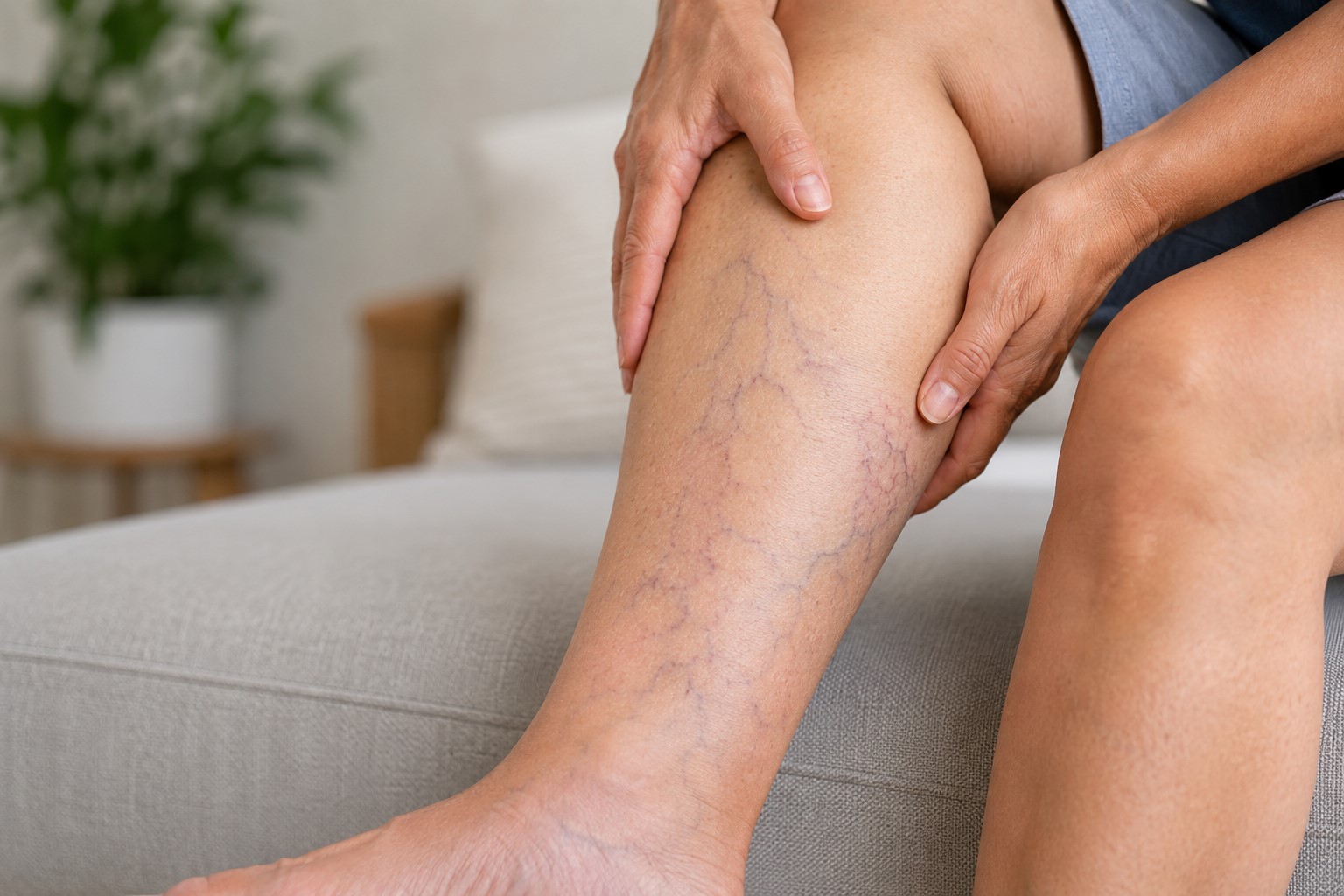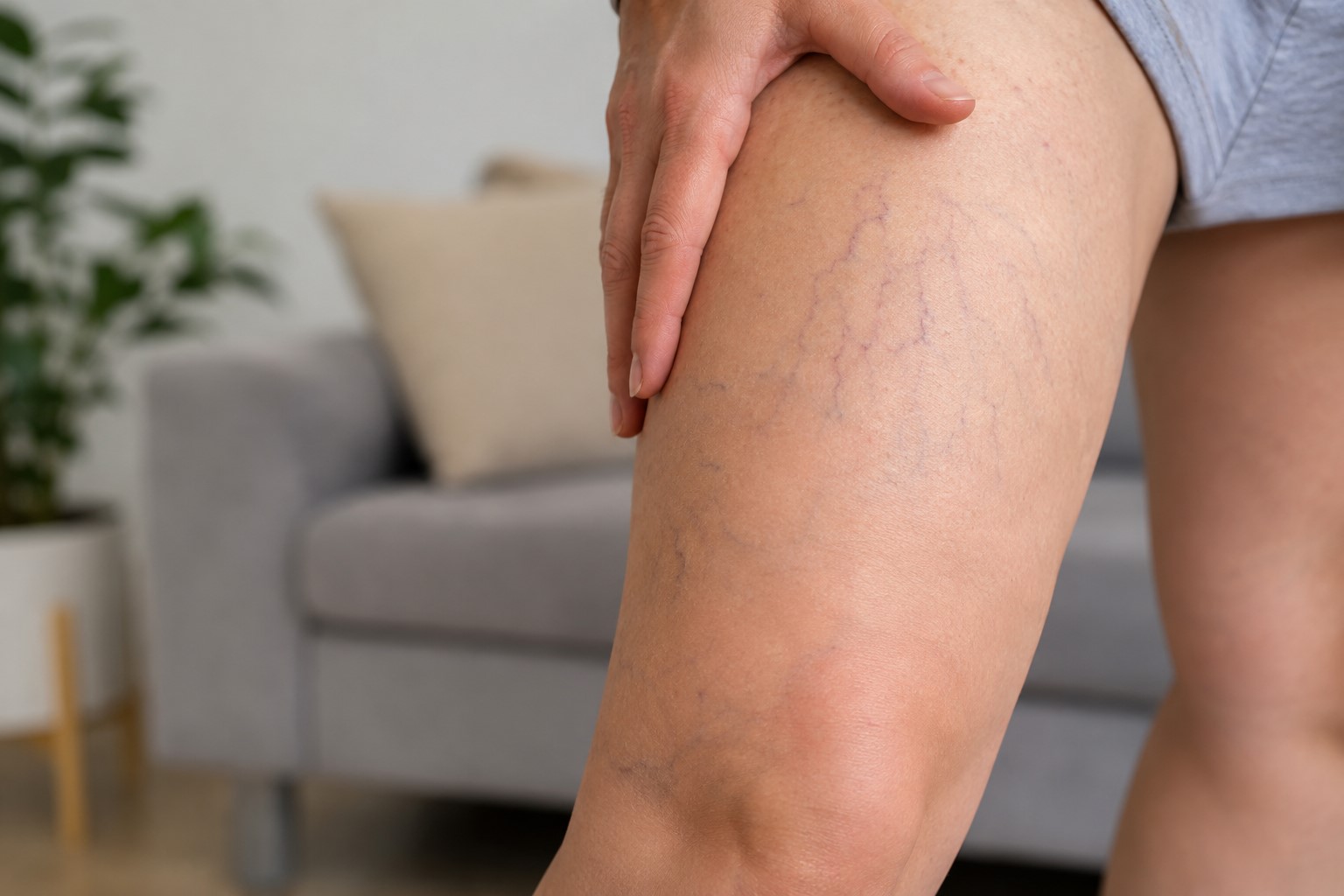

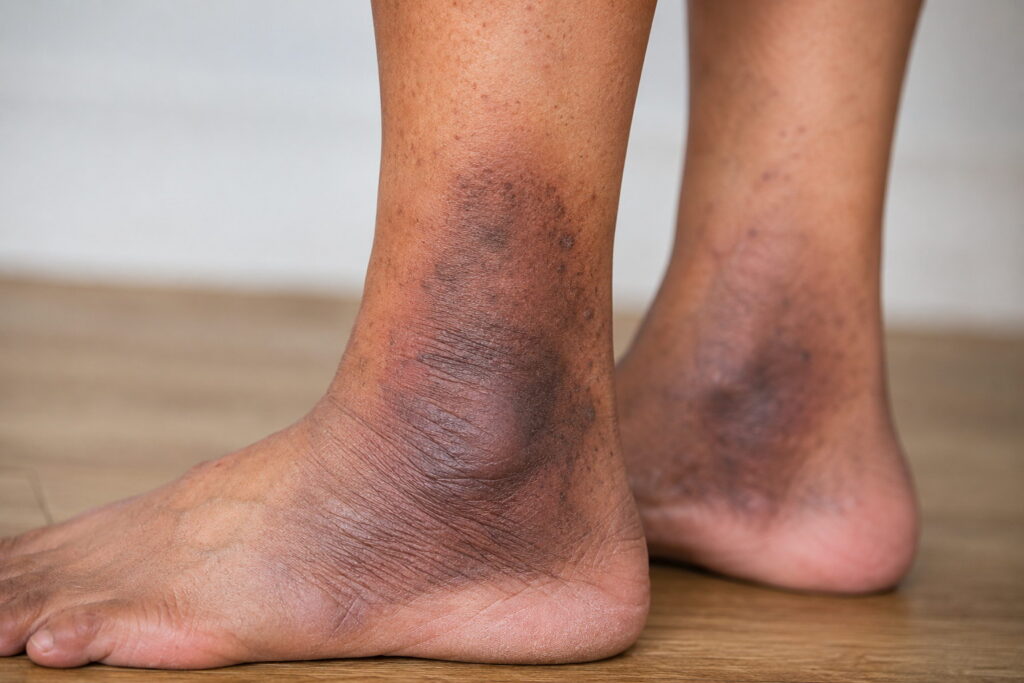
Many people notice darkening skin around their ankles or lower legs and assume it’s simply aging, dry skin, or a cosmetic issue. However, skin discoloration near the ankles can actually be a warning sign of an underlying vein condition called Chronic Venous Insufficiency (CVI).
If left untreated, CVI can progress over time and lead to worsening discomfort, swelling, skin damage, and even leg ulcers. The good news is that modern vein treatments can effectively address the root cause and help improve both symptoms and appearance.
What Is Chronic Venous Insufficiency?
Chronic Venous Insufficiency occurs when the valves inside the leg veins become damaged or weakened. Normally, these valves help blood flow upward toward the heart. When they stop working properly, blood begins pooling in the legs — a condition known as venous reflux disease.
Over time, this increased pressure in the veins can cause:
- Swelling in the legs or ankles
- Aching or heaviness
- Varicose veins
- Itching or burning sensations
- Skin thickening or discoloration
- Slow-healing wounds near the ankles
One of the earliest visible signs is often brown, reddish, or dark discoloration around the ankles.
Why Does Skin Around the Ankles Turn Dark?
When blood pools in the lower legs for long periods, pressure builds inside the veins. Small amounts of blood and fluid can leak into surrounding tissues, causing inflammation and changes in skin pigmentation.
This discoloration may appear:
- Brown
- Purple
- Reddish
- Rust-colored
Many patients also notice the skin becoming dry, itchy, tight, or leathery over time.
Because these changes develop gradually, people often ignore them until symptoms become more severe.
Other Symptoms You Shouldn’t Ignore
Dark ankle skin is commonly accompanied by other symptoms of vein disease, including:
- Leg swelling, especially after standing
- Heavy or tired legs
- Night cramps
- Throbbing or aching pain
- Visible varicose veins
- Restless legs
- Itching around the lower legs
If you are experiencing several of these symptoms together, a vein evaluation may be recommended.
How Chronic Venous Insufficiency Is Diagnosed
A proper diagnosis starts with a detailed consultation and an ultrasound-based vein evaluation. Ultrasound imaging allows specialists to identify damaged veins, venous reflux, and areas where blood is pooling.
This non-invasive test helps determine the most effective treatment plan based on your specific condition.
Modern Treatment Options for CVI
Today’s vein treatments are minimally invasive and designed to treat the underlying cause of symptoms rather than simply covering them up.
Depending on your condition, treatment may include:
Radiofrequency or Laser Ablation
A minimally invasive procedure that closes diseased veins and reroutes blood flow to healthier veins.
Sclerotherapy
A specialized solution is injected into affected veins to close them and improve circulation and appearance.
Compression Therapy
Medical-grade compression stockings can help reduce swelling and support healthy blood flow.
Personalized Multi-Modal Care
Some patients benefit from a combination of treatments tailored to the severity of their vein disease.
Why Early Treatment Matters
Ignoring Chronic Venous Insufficiency can lead to worsening skin damage and more serious complications over time, including:
- Permanent skin discoloration
- Skin thickening
- Venous ulcers
- Increased swelling and discomfort
- Infection risk
Early diagnosis and treatment can help relieve symptoms, improve circulation, and reduce the risk of long-term complications.
Insurance Coverage for Vein Treatment
Many medically necessary vein treatments for Chronic Venous Insufficiency are covered by insurance when certain criteria are met. A vein specialist can help determine your eligibility after evaluation and ultrasound testing.
When to Schedule a Vein Evaluation
If you have dark skin around your ankles, persistent swelling, or aching legs, it may be more than a cosmetic concern. A professional vein evaluation can help identify whether Chronic Venous Insufficiency is contributing to your symptoms and what treatment options are available.
Early treatment can improve comfort, circulation, and overall leg health before the condition progresses further.